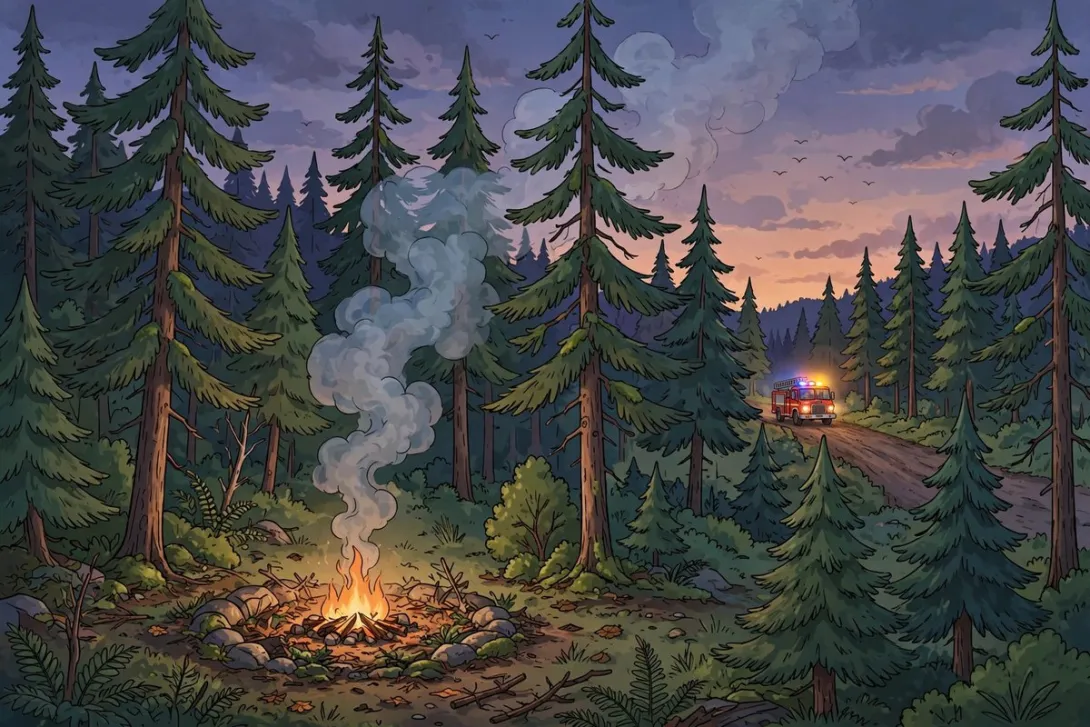
Fire season in the southern Rockies rarely ends quietly, and this October has been no exception on the Carson National Forest. Fire crews spent the past week wrapping up work on two very different fires — one wild, one prescribed — as hot, dry weather kept the forest on edge.
The wild one was the Medio Fire, a lightning-caused start east of Trout Lakes Road 125 on the forest's west side. At just a quarter acre, creeping through ponderosa pine understory, it was the kind of start that could have gone either way. Carson fire managers decided to fully contain it rather than manage it, citing its location near the forest boundary and the need to keep crews available for planned prescribed fire work nearby. Smoke was visible from Cebolla while crews worked it.
Meanwhile, on the Dorado/Canada del Agua prescribed fire south of Tres Piedras, crews completed ignitions across 3,000 acres of forest floor. The low-intensity burn consumed dead and down surface fuels — grasses, shrubs, and needle litter — the exact material that turns a lightning strike into a running crown fire. Fire managers established blackline around the perimeter and spent subsequent days patrolling for heat near the edges, planning next steps only once the burn area receives significant moisture.
This is prescribed fire doing exactly what it is designed to do: reduce fuels on the Forest Service's schedule instead of nature's. The Carson runs an active prescribed fire program across both its east and west zones, coordinated with the New Mexico Environment Department to burn on days when smoke impacts are minimized. Smoke from these operations can settle in valleys overnight and drift for miles — normal, expected, and a fraction of what an uncontrolled wildfire produces.
For forest visitors, the takeaway is straightforward. Check the Carson National Forest alerts page before any trip — prescribed burns, closures, and restrictions change with conditions. Never call 911 to report smoke from a prescribed fire you have already confirmed is planned. And if you are camping or hunting this fall, know the current fire restrictions: in dry years they can extend well into autumn, and violating them carries fines up to $5,000. The Medio Fire started with a single lightning bolt. It takes far less than that from a careless campfire.