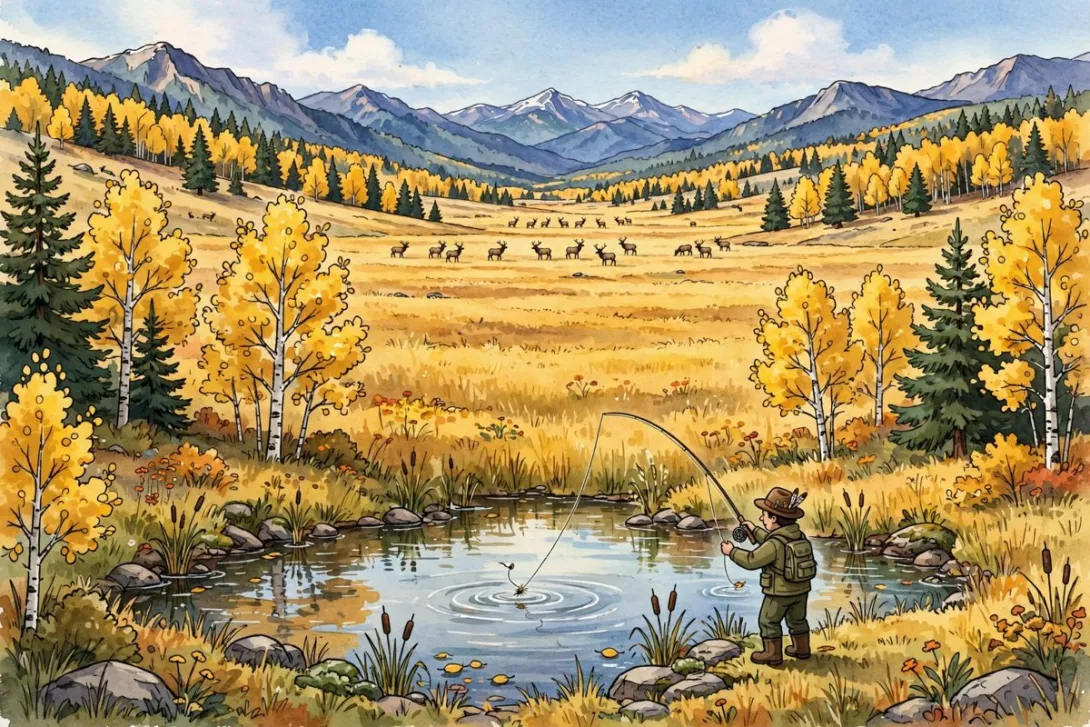
October brings a quieter, golden window to the Valle Vidal, the large unit of the Carson National Forest in northern New Mexico near the Colorado border. Broad meadows, spruce and fir forest, and cold, clear streams give this high country a different feel from the busier trailheads around Taos and Red River, and fall is when that space is easiest to appreciate.
Timing helps. According to the Forest Service, portions of the Valle Vidal close each year to protect one of New Mexico's largest elk herds. The east side closes January 1 and reopens April 1 for wintering habitat, and the west side closes May 1 and reopens July 1 for elk calving. By mid-October, both seasonal closures are past, and Forest Service Roads 1900, 1910 and 1950 provide the main routes through the unit.
Fall is also prime wildlife-watching season. Elk are the Valle Vidal's signature residents, and visitors should give all wildlife plenty of space, especially during hunting season. Anyone planning to hunt should check the current New Mexico Department of Wildlife hunting rules and draw information before going, rather than relying on general guides, because seasons and license requirements are specific and change by year.
Fishing is the other fall draw. At Shuree Ponds, a Forest Service day-use area with three ponds, fishing opens July 1. New Mexico fishing rules list Valle Vidal waters as open from July 1 through December 31, so October still falls well inside that season. Streams in the unit, including Comanche Creek, are known for Rio Grande cutthroat trout. Because Valle Vidal waters carry special restrictions, anglers should confirm the current tackle, catch and possession rules in the official New Mexico fishing guide before casting, and carry a valid license.
Camping takes a little extra planning here. Forest Service restrictions limit vehicle camping in the Valle Vidal to two designated sites, Cimarron Campground and McCrystal Campground. Camping is also prohibited within a half-mile of Forest Service roads outside those campgrounds, and within 100 yards of natural waters or 300 yards of constructed waters. Those rules protect wildlife habitat and riparian areas, and they are worth knowing before choosing a spot for the night.
Getting there is part of the adventure. From Costilla, the Forest Service directs visitors east on Highway 196 toward Rio Costilla Park, continuing as the road becomes Forest Road 1950, then following it south at Comanche Point for about 11 miles to Shuree Ponds. From Cimarron, the drive is about 37 miles on Forest Road 1950. There are no paved roads on that route and cell phone service is unreliable, so a downloaded or paper map, a full tank and supplies brought from town are sensible precautions.
Pack for real fall weather, too. Mornings can start cold, afternoons can warm up, and conditions in high country can change quickly. Layers, water, sun protection and a clear plan shared with someone back home make the day smoother. For anglers, hikers, campers and wildlife watchers willing to drive the extra miles, the Valle Vidal in October offers what it does best: room to breathe, cold water, elk country and very little hurry.