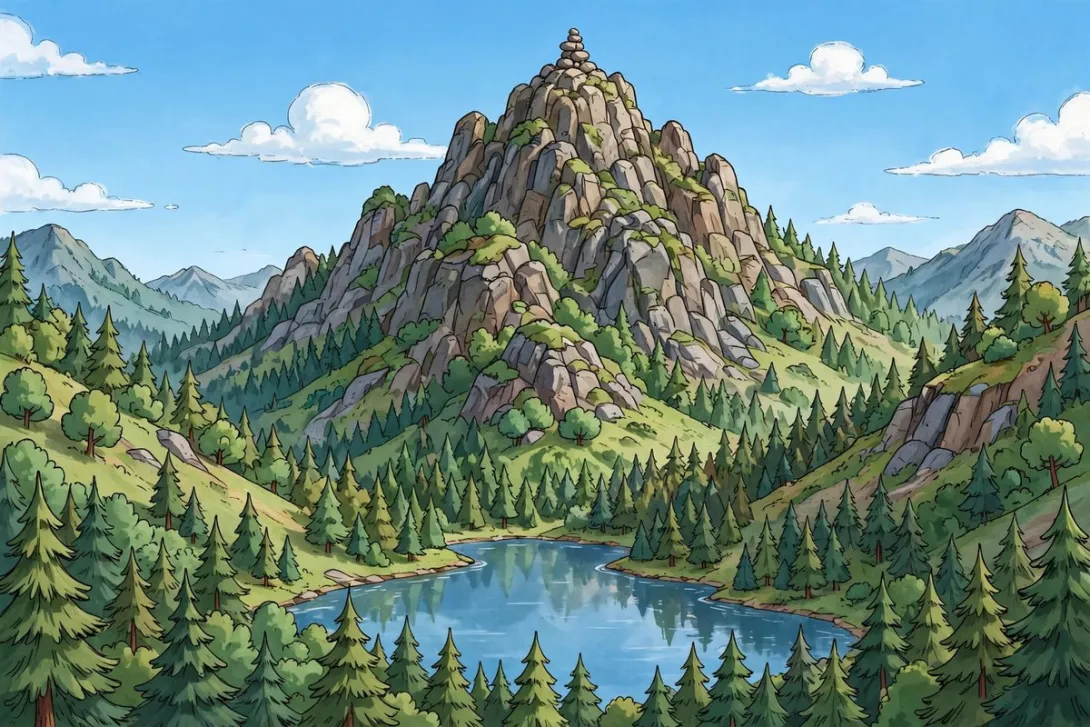
Every state has a rooftop, and New Mexico's sits deep in the Carson National Forest. Wheeler Peak rises to 13,161 feet, the highest ground in the state, and the most popular way to stand on it is the Wheeler Peak Trail via Williams Lake — about eight miles round trip with roughly 3,000 feet of elevation gain, starting near Taos Ski Valley.
The hike begins at the Williams Lake Trailhead off Kachina Road. The first two miles climb gently through spruce and fir forest to Williams Lake itself, a classic alpine tarn cupped beneath the summit ridge. This stretch is the busiest part of the trail and makes a fine turnaround for anyone feeling the altitude. From the lake, the route steepens considerably, switchbacking up open slopes above timberline to the summit ridge and then along it to the top.
Give yourself most of a day. Fit hikers finish in six to eight hours, but the altitude slows everyone down, and afternoon thunderstorms are a near-daily event in July and August. Start at first light, plan to be off the exposed ridge by noon, and carry more water than you think you need — there is none above the lake. Snow can linger on the upper mountain into July, and it typically returns in early October, so the prime window runs from late June through September.
What you get for the effort is one of the great summit views in the southern Rockies: the Sangre de Cristos rolling north into Colorado, the Rio Grande rift country spreading west, and on the clearest days, a horizon that seems to take in half of northern New Mexico. Rocky Mountain bighorn sheep haunt the high basins, and in late summer the tundra blooms with alpine wildflowers.
A few practical notes from the Forest Service: the trailhead is reached by driving north from Taos on US 64, then east on NM 150 to Taos Ski Valley and through the ski area parking to the Twining Campground area. No technical gear is required in summer conditions. Dogs are allowed but must be leashed in the wilderness, and standard wilderness rules apply — pack out everything, camp at least 200 feet from water, and keep groups small. Check current conditions with the Carson National Forest before you go, especially early in the season when snowfields can hide the upper trail.